Image 1 of 7
Image 2 of 7
Image 3 of 7
Image 4 of 7
Image 5 of 7
Image 6 of 7
Image 7 of 7
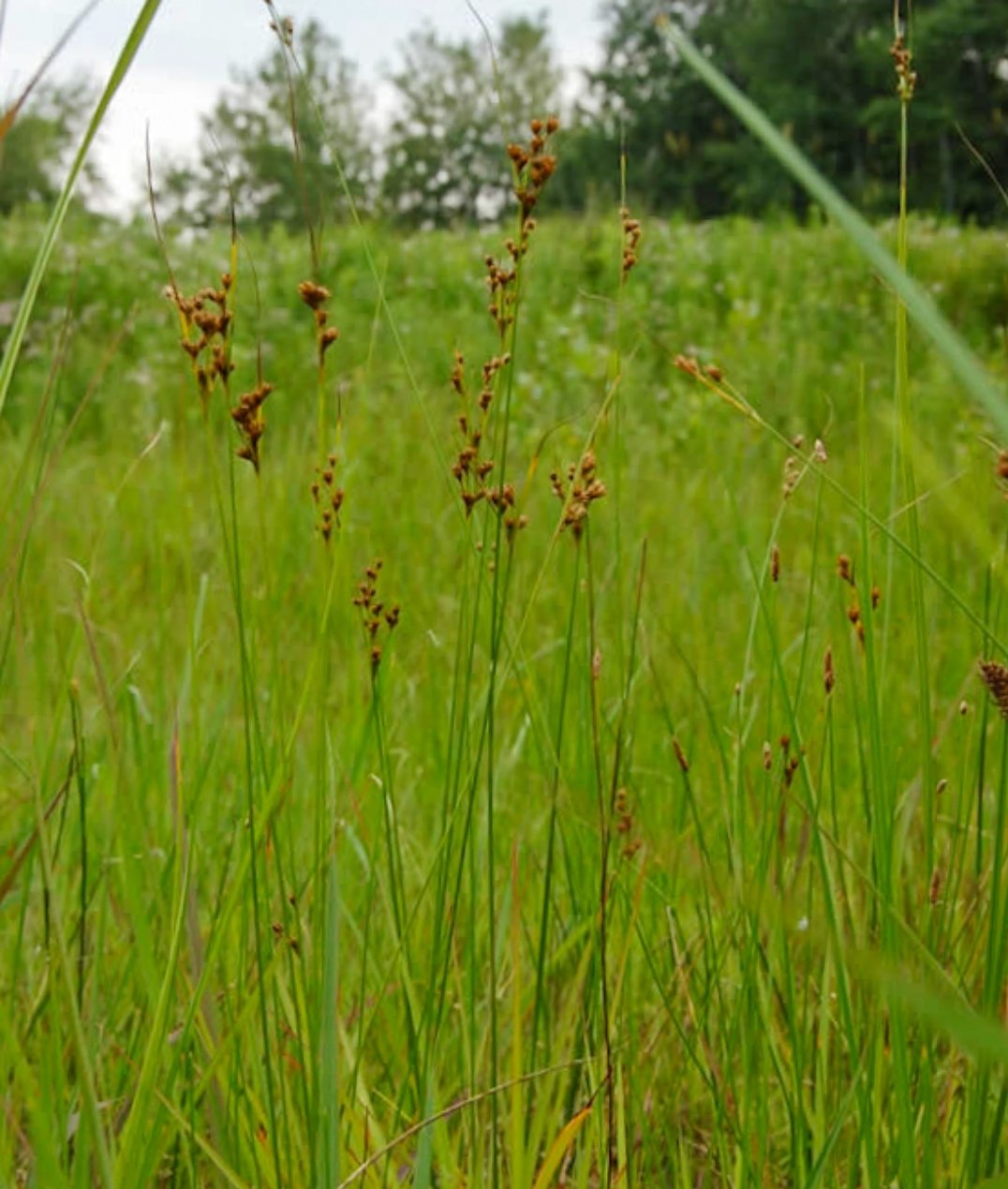
Dudley's Rush (Juncus dudleyi)
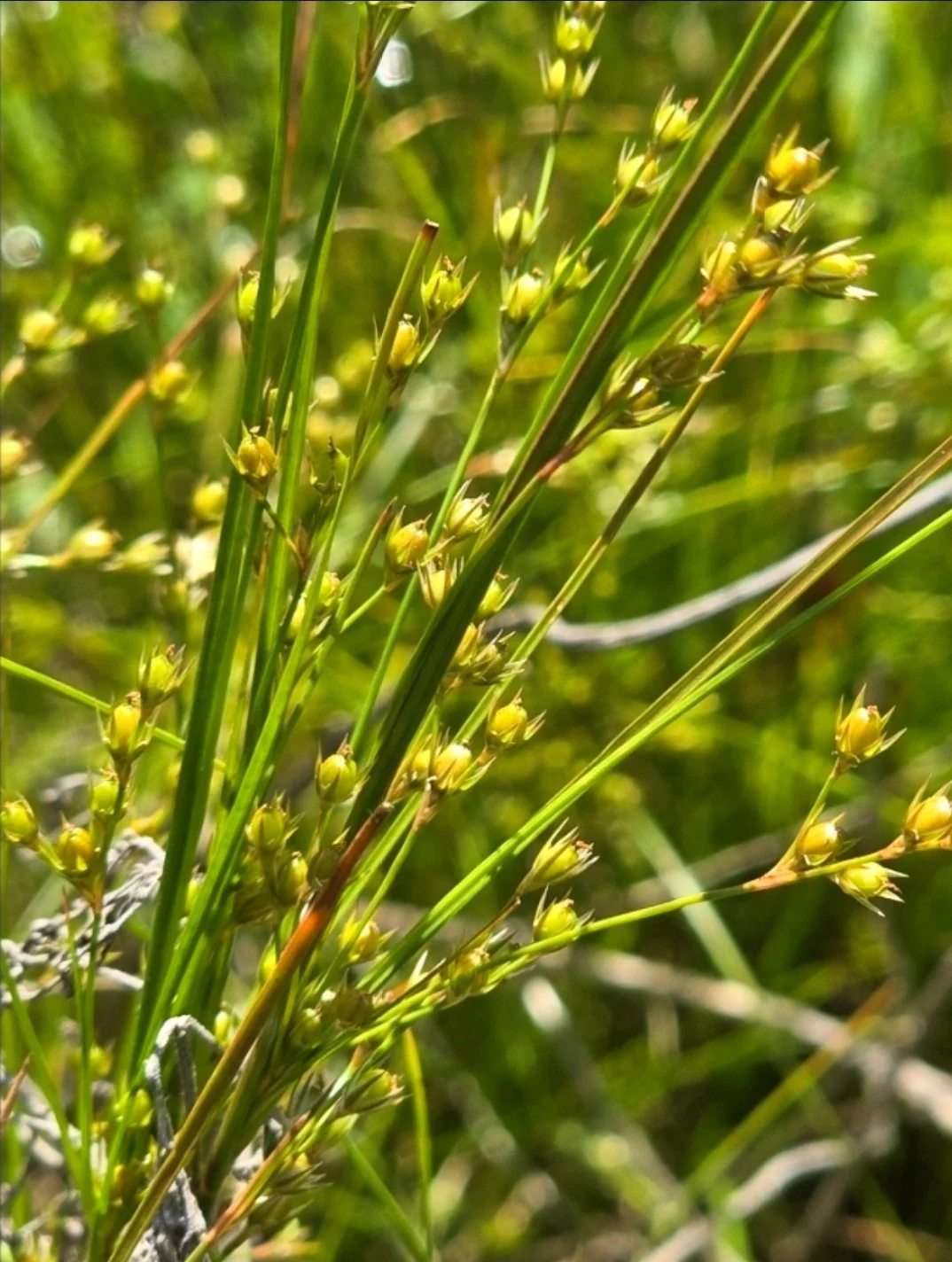
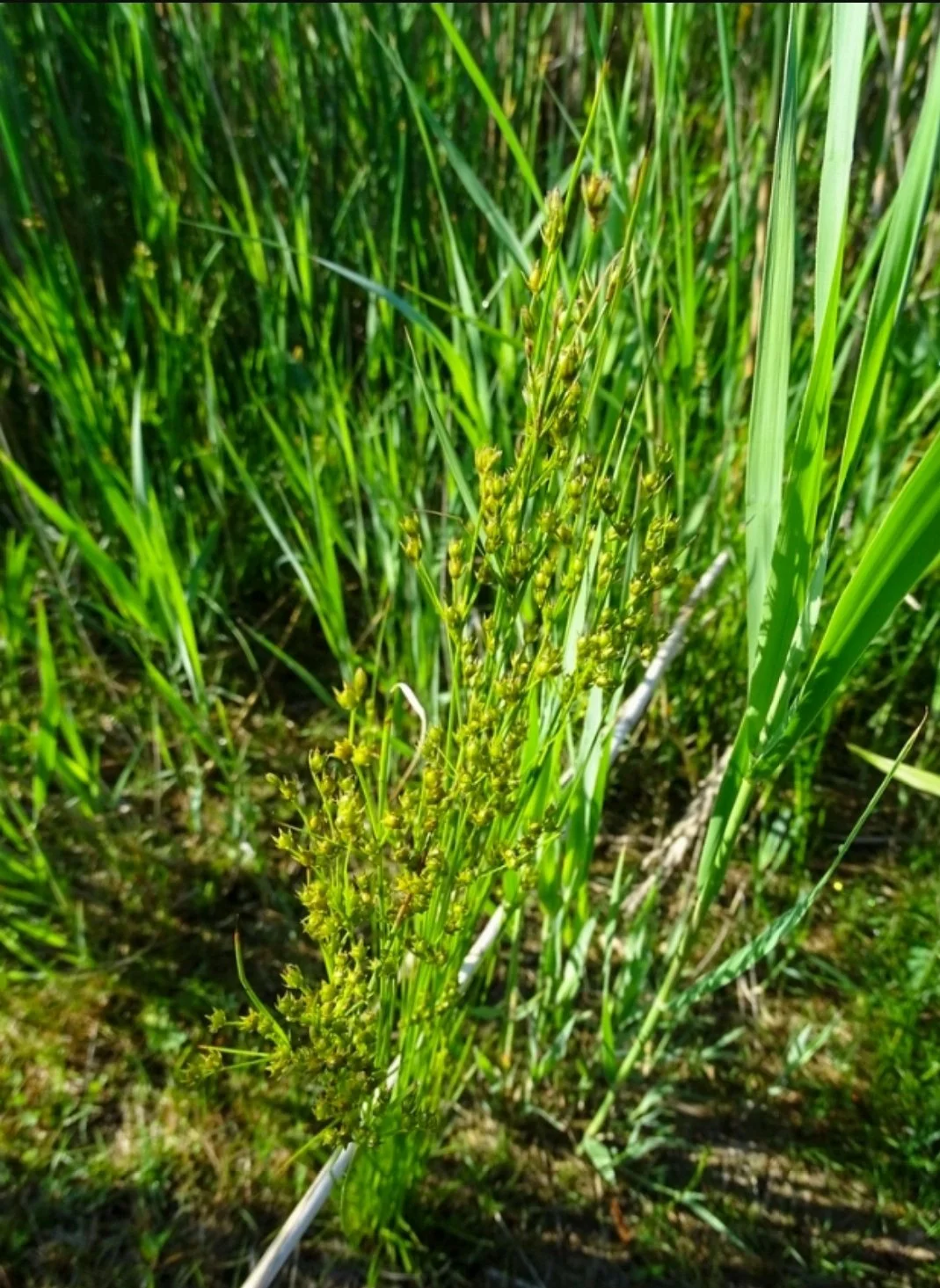
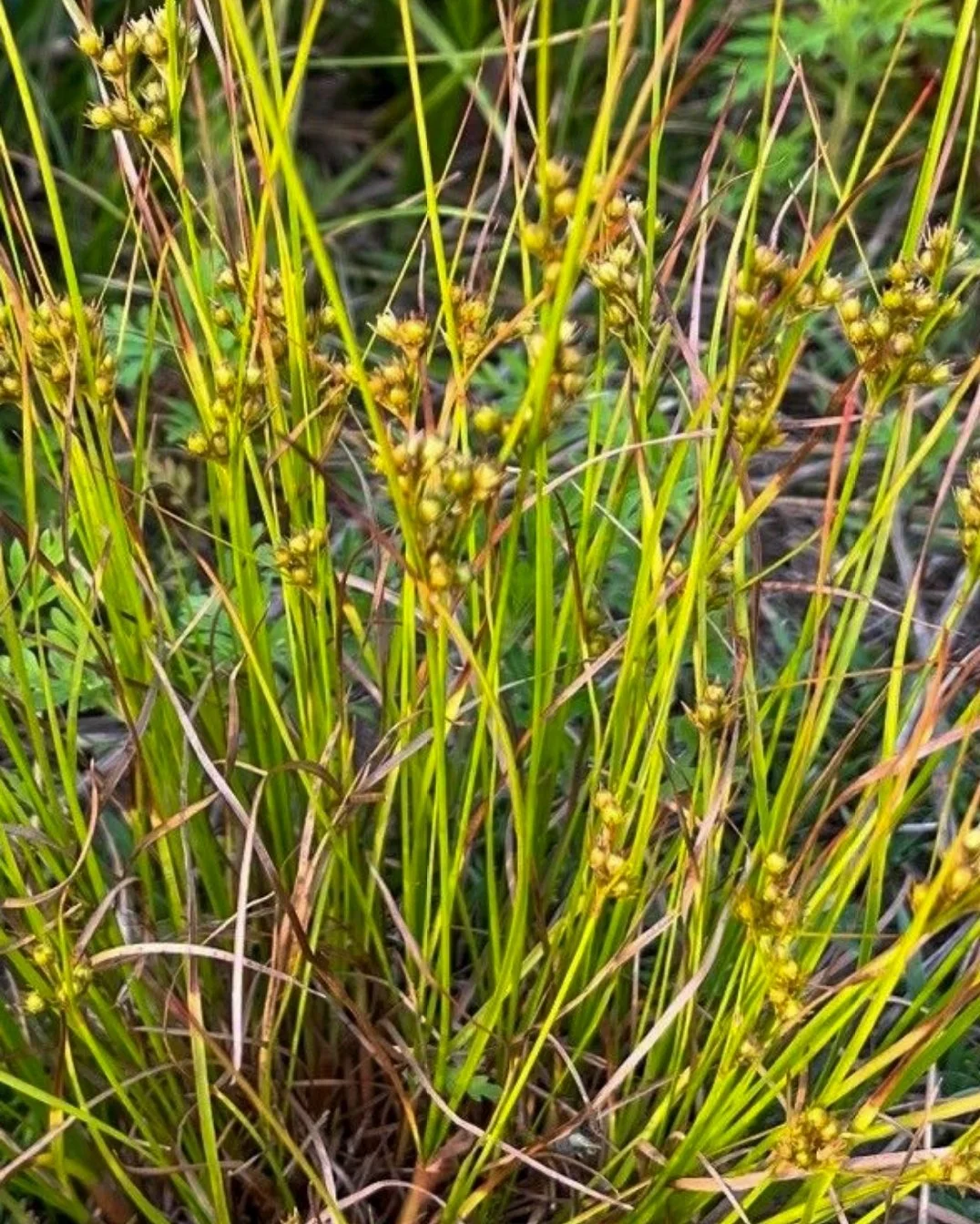
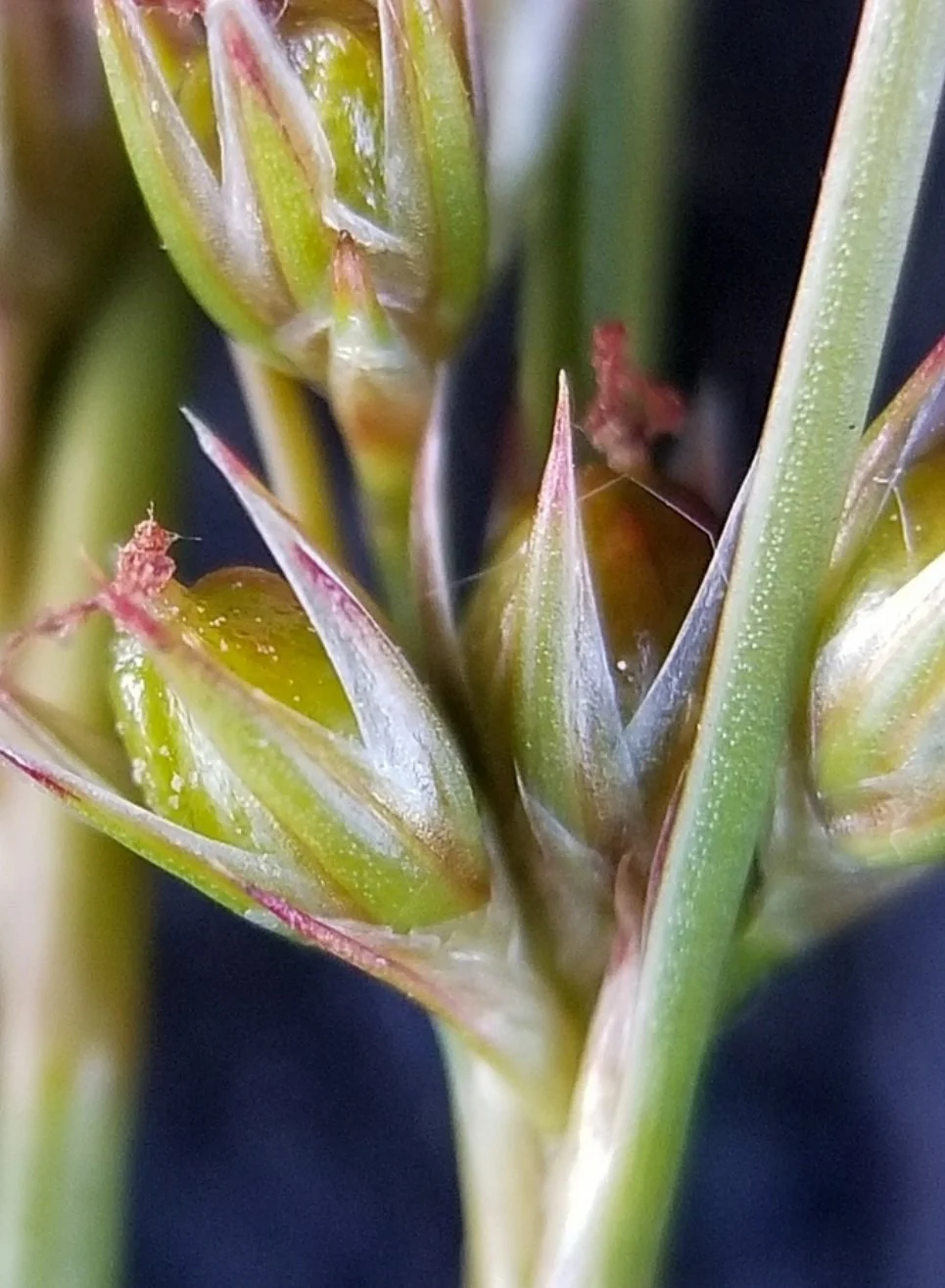
Juncus dudleyi is the scientific name for the native species more commonly known as Dudley’s Rush and is widely found throughout much of North America.
Dudley's Rush thrives in cool, moist climates and is commonly found in regions with consistent or abundant rainfall. It prefers soils that are saturated yet reasonably well-drained, often growing in claylike or loamy substrates rich in organic matter. Its tolerance for fluctuating water levels allows it to persist along the margins of both still and flowing waters. Dudley's Rush actively grows during the cooler seasons of spring and fall when soil temperatures are low to moderate, it is also a host species for the beautiful hemiparasitic native plant species Indian Paintbrush (Castilleja coccinea) who when sown together, grow conjoined together.
A variety of insects feed on this rush, including Billbugs (Sphenophorus spp.), numerous Leafhoppers, and several Leaf Beetles of the Chrysomelidae family, not to mention the larvae of multiple moth species. Additionally, seeds and seed capsules are commonly eaten by waterbirds such as the King Rail (Rallus elegans), Sora Rail (Porzana carolina), and the secretive Virginia Rail (Rallus limicola), as well as by dabbling ducks like the Green-winged Teal (Anas carolinensis) and Northern Pintail (Anas acuta). Even small omnivorous rodents such as the White-footed Mouse (Peromyscus leucopus) feed on parts of the plant and are also known to be voracious predators of the detrimentally invasive Spongy Moth (Lymantria dispar) pupae, making Dudley’s Rush an important and multifaceted food source within wetland food webs.
The extensive, fibrous root system of Juncus dudleyi also plays an important role in stabilizing soil in wetland areas, making it a valuable species for erosion control in sensitive and disturbed ecosystems. The species generally prefers full sun and can tolerate a wide range of soil textures, including loam, clay-loam, and even gravelly ground. Under ideal conditions it can spread vigorously and form extensive stands.
Dudley's Rush helps in water filtration by absorbing excess nutrients and contaminants, which leads to measurable improvements in water quality within its habitat. The dense, tufted growth of Dudley's Rush creates protective microhabitats for a variety of aquatic and terrestrial species, including amphibians, waterfowl, songbirds, and numerous beneficial insects. The plant's sturdy stems and foliage provide both shelter and safe breeding grounds, directly contributing to enhanced local biodiversity and healthier ecosystem function.
Plant Details:
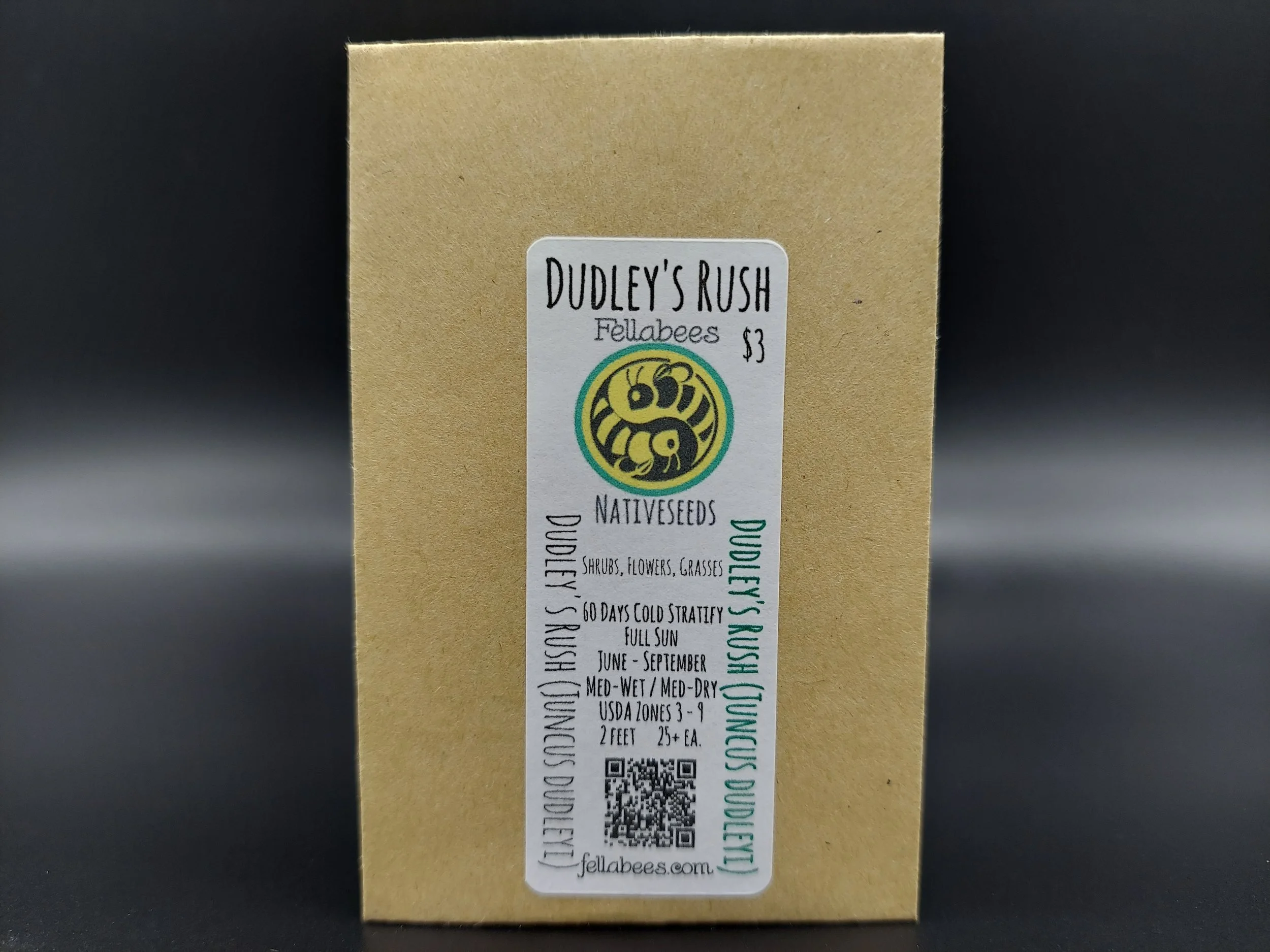
USDA Zones: 3 - 8
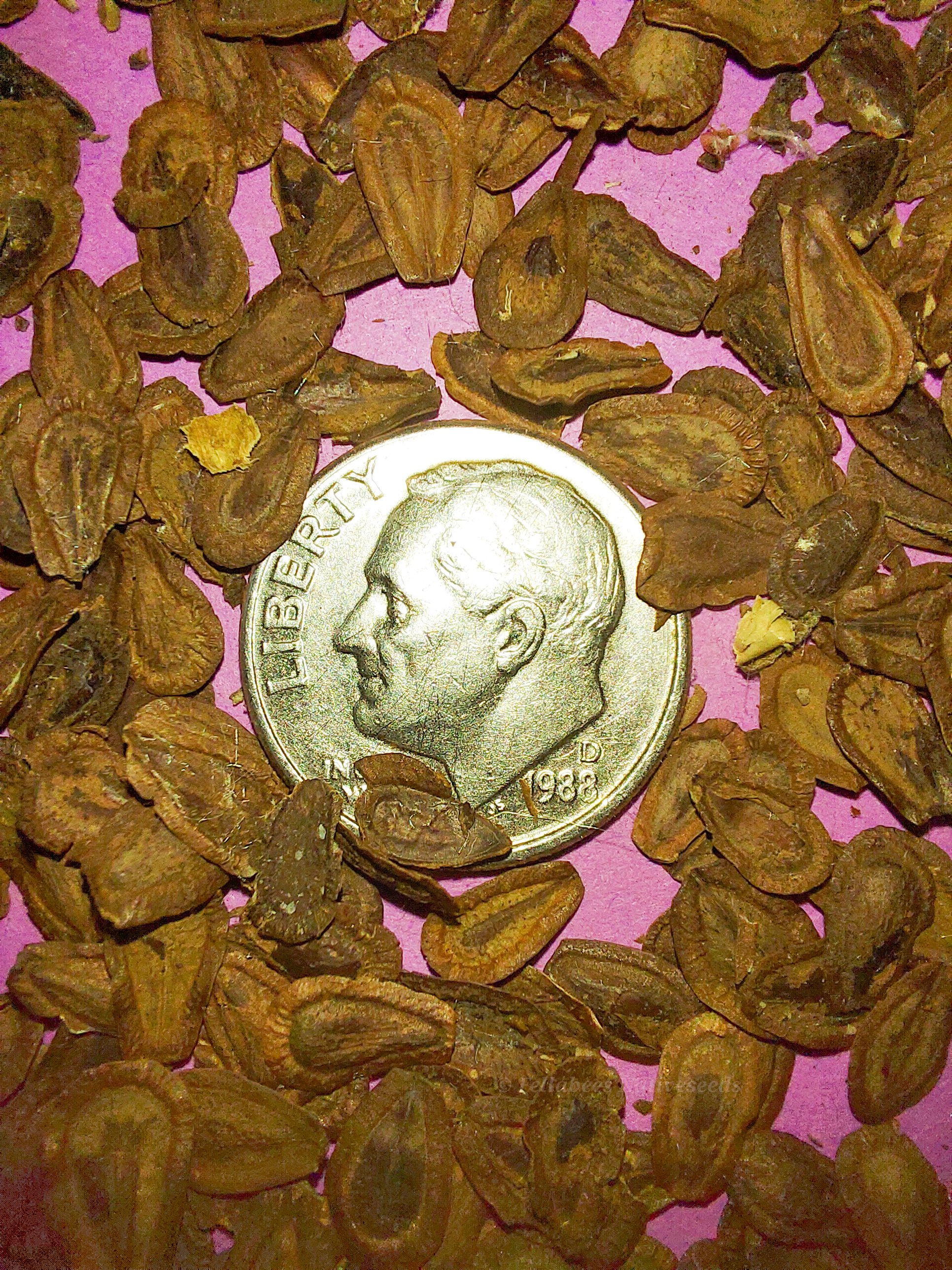
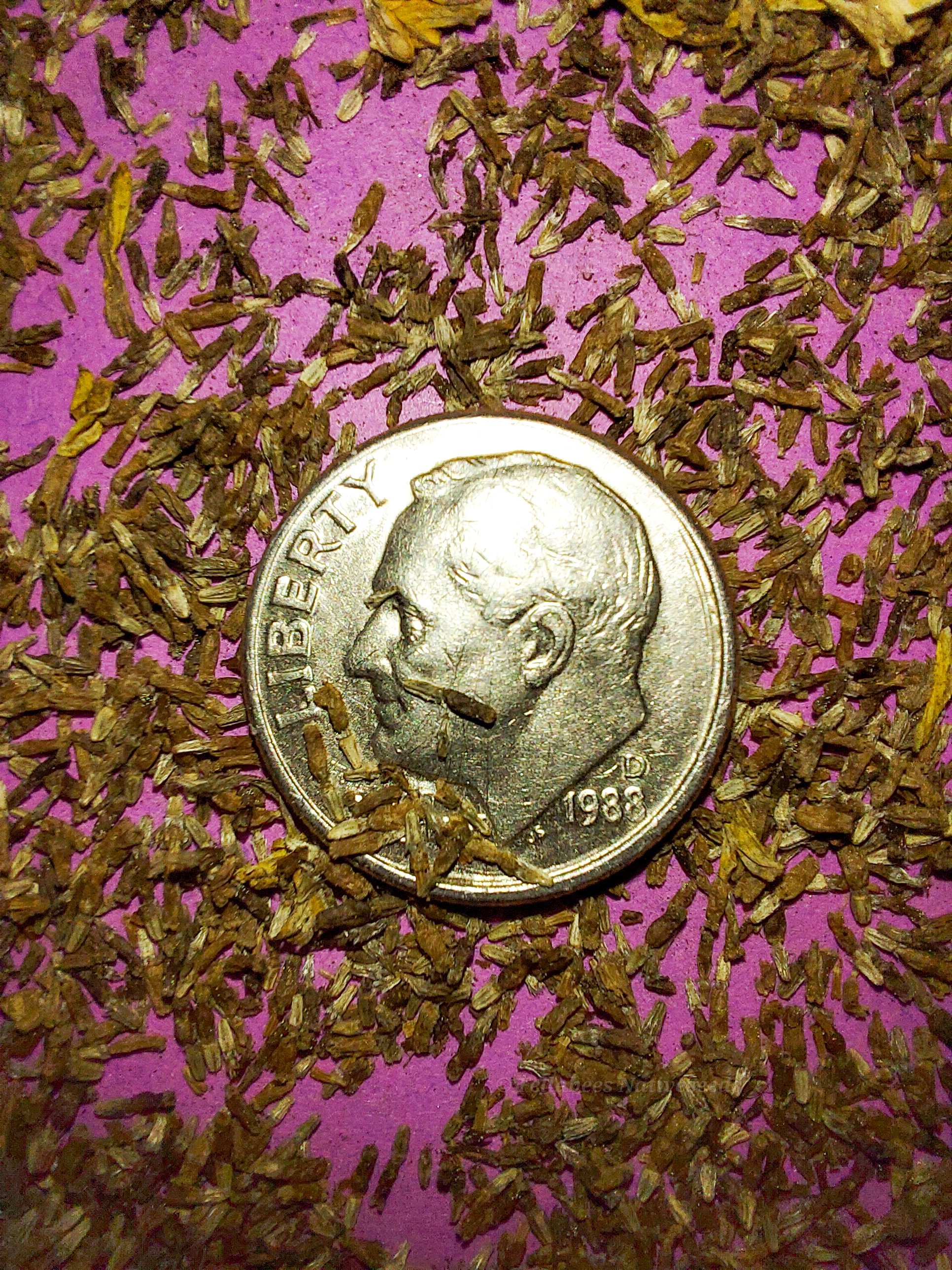
Germination Needs: Needs 60 Days Cold-Moist Stratification. Seeds are very small needing light to germinate, surface sow and bottom water for best results.
Life Cycle: Perennial
Sun Exposure: Full Sun
Soil Moisture: Medium-Wet, Medium, Medium-Dry
Plant Spacing: 8 - 16 inches
Height: 2 feet
Bloom time: June, July, August, September
Bloom Color: Green/Brown
Advantages:
Pollinator Favorite: moths, beetles
Bird Favorite: seeds, insects, fruit, nectar, nesting, perches.
Deer Resistant: No
Native to: Wisconsin, Minnesota, Iowa, Illinois, Indiana, Michigan, Ohio, Pennsylvania, New York, Vermont, New Hampshire, Maine, Massachusetts, Rhode Island, Connecticut, Maryland, New Jersey, West Virginia, Virginia, Kentucky, Tennessee, North Carolina, South Carolina, Alabama, Arkansas, Missouri, Texas, Oklahoma, Kansas, Nebraska, South Dakota, North Dakota, Montana, Wyoming, Colorado, New Mexico, Arizona, Utah, Nevada, Idaho, Washington State, Oregon and California.
This species is considered present but rare in several counties of the states of Maine, New Jersey, North Carolina, South Carolina, Alabama, and California.
Seed Count: 25+
.
.
Packet quantities:
We pride ourselves on ethical, hands on, ecological management, using no mechanical or chemical methods whatsoever.
All of our native seed is hand reared, hand-picked, and hand packed from native prairies under our exclusive management, never breaking chain of custody from the field until it is sent to you. Each packet is hand prepared for shipment by us, directly.
Small seed species will contain greater than 20-25 seed
Large seed species will contain greater than 10-15 seed
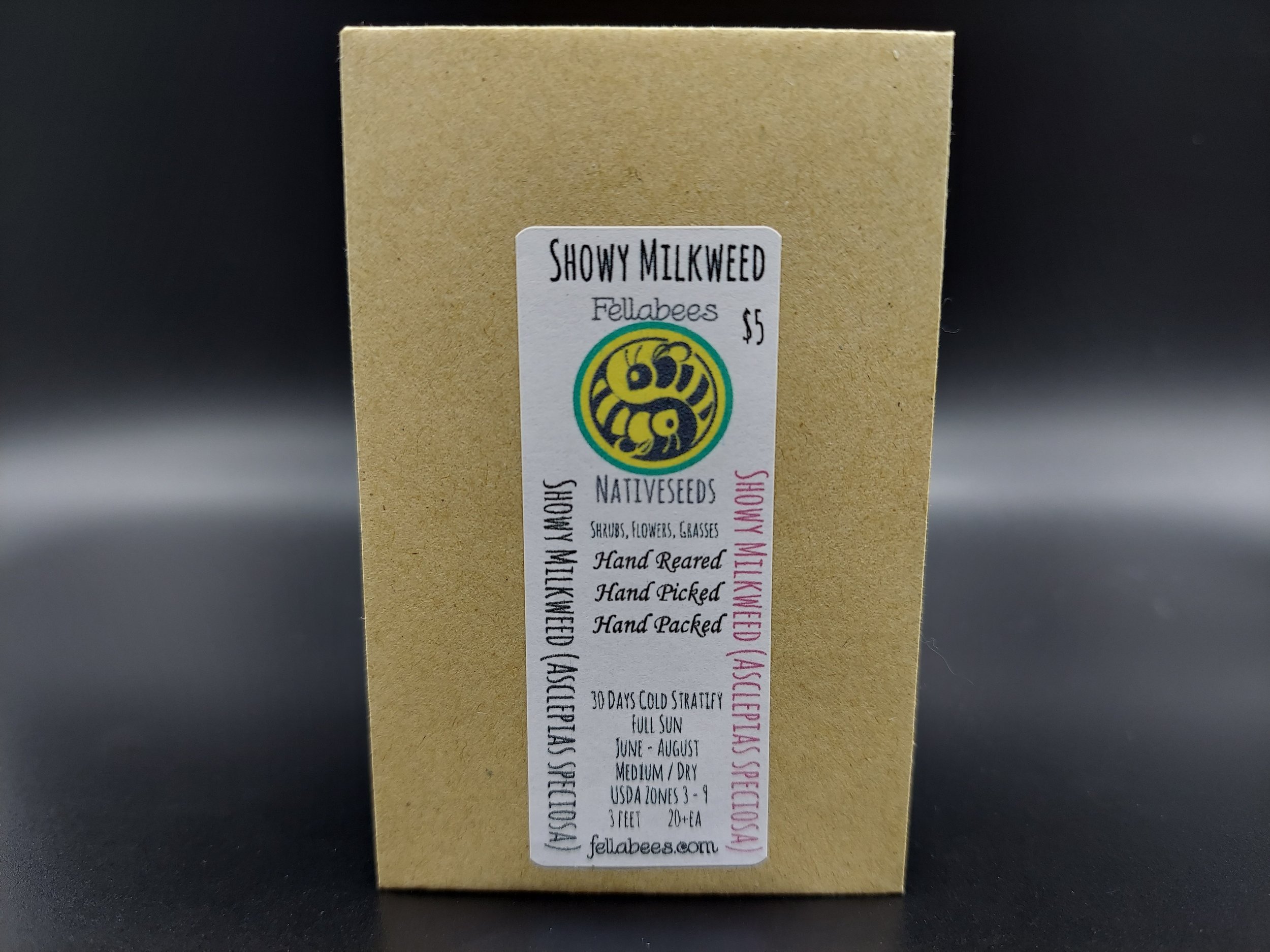
All packets are individually marked at the bottom of the front label with expected count, however most if not all packets will have many more than the minimum count by default.
It is our mission to spread the wealth of native plant and pollinator ecological sustainability and educate back yard gardeners as well as corporate and government entities in how to germinate, grow, and benefit from native synergies.
Thank you for your support, it is because of you, that we can grow together to do, what we do. 🐛🦋🐝🐞🌾🌱🌼🧡
Dudley's Rush (Juncus dudleyi)
Juncus dudleyi is the scientific name for the native species more commonly known as Dudley’s Rush and is widely found throughout much of North America.
Dudley's Rush thrives in cool, moist climates and is commonly found in regions with consistent or abundant rainfall. It prefers soils that are saturated yet reasonably well-drained, often growing in claylike or loamy substrates rich in organic matter. Its tolerance for fluctuating water levels allows it to persist along the margins of both still and flowing waters. Dudley's Rush actively grows during the cooler seasons of spring and fall when soil temperatures are low to moderate, it is also a host species for the beautiful hemiparasitic native plant species Indian Paintbrush (Castilleja coccinea) who when sown together, grow conjoined together.
A variety of insects feed on this rush, including Billbugs (Sphenophorus spp.), numerous Leafhoppers, and several Leaf Beetles of the Chrysomelidae family, not to mention the larvae of multiple moth species. Additionally, seeds and seed capsules are commonly eaten by waterbirds such as the King Rail (Rallus elegans), Sora Rail (Porzana carolina), and the secretive Virginia Rail (Rallus limicola), as well as by dabbling ducks like the Green-winged Teal (Anas carolinensis) and Northern Pintail (Anas acuta). Even small omnivorous rodents such as the White-footed Mouse (Peromyscus leucopus) feed on parts of the plant and are also known to be voracious predators of the detrimentally invasive Spongy Moth (Lymantria dispar) pupae, making Dudley’s Rush an important and multifaceted food source within wetland food webs.
The extensive, fibrous root system of Juncus dudleyi also plays an important role in stabilizing soil in wetland areas, making it a valuable species for erosion control in sensitive and disturbed ecosystems. The species generally prefers full sun and can tolerate a wide range of soil textures, including loam, clay-loam, and even gravelly ground. Under ideal conditions it can spread vigorously and form extensive stands.
Dudley's Rush helps in water filtration by absorbing excess nutrients and contaminants, which leads to measurable improvements in water quality within its habitat. The dense, tufted growth of Dudley's Rush creates protective microhabitats for a variety of aquatic and terrestrial species, including amphibians, waterfowl, songbirds, and numerous beneficial insects. The plant's sturdy stems and foliage provide both shelter and safe breeding grounds, directly contributing to enhanced local biodiversity and healthier ecosystem function.
Plant Details:
USDA Zones: 3 - 8
Germination Needs: Needs 60 Days Cold-Moist Stratification. Seeds are very small needing light to germinate, surface sow and bottom water for best results.
Life Cycle: Perennial
Sun Exposure: Full Sun
Soil Moisture: Medium-Wet, Medium, Medium-Dry
Plant Spacing: 8 - 16 inches
Height: 2 feet
Bloom time: June, July, August, September
Bloom Color: Green/Brown
Advantages:
Pollinator Favorite: moths, beetles
Bird Favorite: seeds, insects, fruit, nectar, nesting, perches.
Deer Resistant: No
Native to: Wisconsin, Minnesota, Iowa, Illinois, Indiana, Michigan, Ohio, Pennsylvania, New York, Vermont, New Hampshire, Maine, Massachusetts, Rhode Island, Connecticut, Maryland, New Jersey, West Virginia, Virginia, Kentucky, Tennessee, North Carolina, South Carolina, Alabama, Arkansas, Missouri, Texas, Oklahoma, Kansas, Nebraska, South Dakota, North Dakota, Montana, Wyoming, Colorado, New Mexico, Arizona, Utah, Nevada, Idaho, Washington State, Oregon and California.
This species is considered present but rare in several counties of the states of Maine, New Jersey, North Carolina, South Carolina, Alabama, and California.
Seed Count: 25+
.
.
Packet quantities:
We pride ourselves on ethical, hands on, ecological management, using no mechanical or chemical methods whatsoever.
All of our native seed is hand reared, hand-picked, and hand packed from native prairies under our exclusive management, never breaking chain of custody from the field until it is sent to you. Each packet is hand prepared for shipment by us, directly.
Small seed species will contain greater than 20-25 seed
Large seed species will contain greater than 10-15 seed
All packets are individually marked at the bottom of the front label with expected count, however most if not all packets will have many more than the minimum count by default.
It is our mission to spread the wealth of native plant and pollinator ecological sustainability and educate back yard gardeners as well as corporate and government entities in how to germinate, grow, and benefit from native synergies.
Thank you for your support, it is because of you, that we can grow together to do, what we do. 🐛🦋🐝🐞🌾🌱🌼🧡