Sale Price:
$1.00
Original Price:
$3.00
Boneset (Eupatorium perfoliatum)
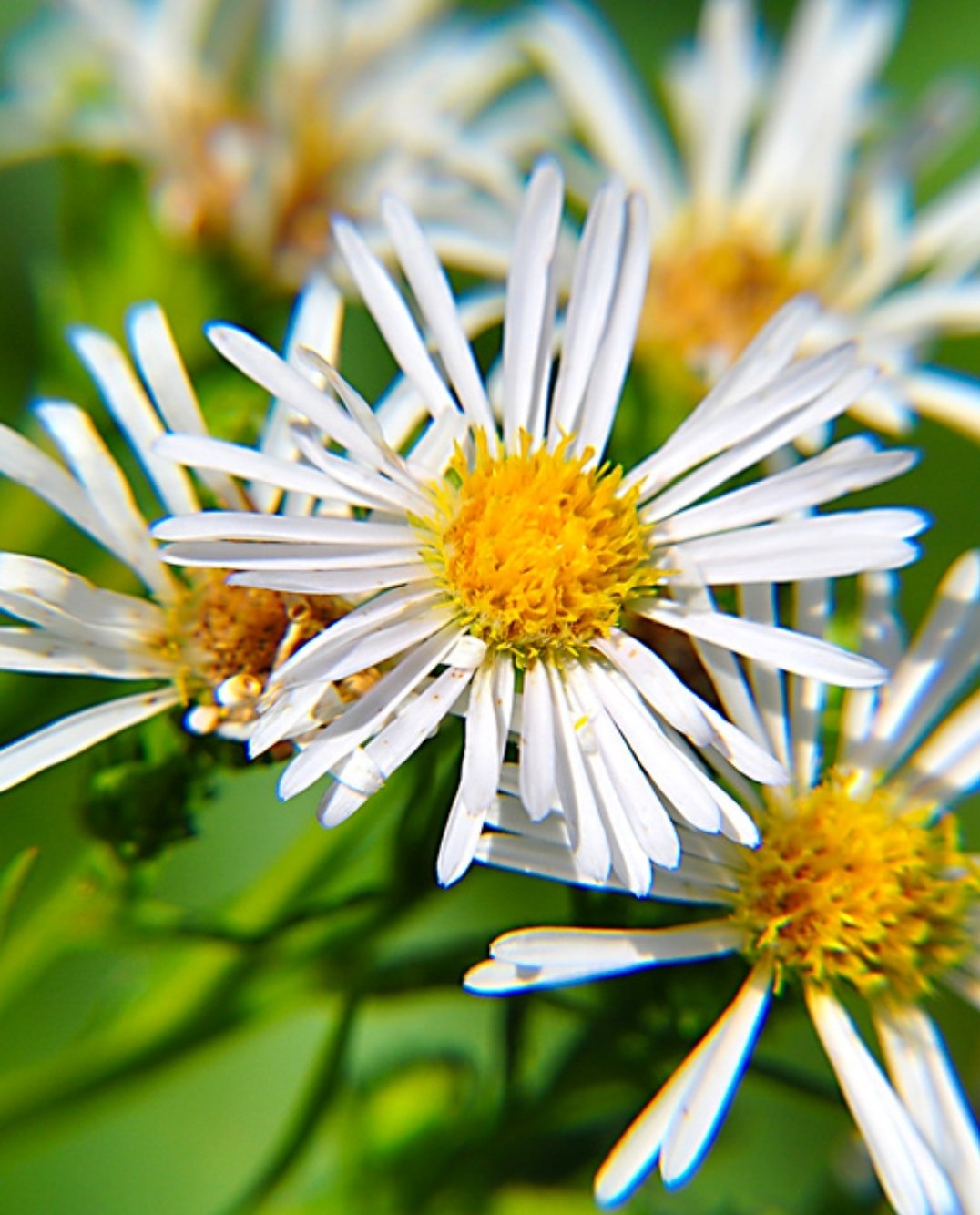
Eupatorium perfoliatum is the scientific name for the native species more commonly known as Boneset, or alternatively as Common Boneset. Boneset is a North American perennial plant in the Asteraceae family. Most commonly found in the Eastern United States and Canada it is widespread from Nova Scotia to Florida, west as far as Texas, Nebraska, the Dakotas, and Manitoba. Historically speaking this plant has also been called Agueweed, Feverwort, or Sweating-plant. In traditional herbal healing, the plant is known as a diaphoretic, or an agent to cause sweating. Indigenous Americans introduced the plants uses to colonists by who learned to use the plant for breaking fevers by means of heavy sweating and more commonly used it to treat fevers by the African American population of the southern United States.
The name "boneset" comes from the use of the plant to treat dengue fever, which is also called "break-bone fever." Boneset is nearly always found in low, wet areas where both mosquitos and the diseases they can carry often co-exist. Male mosquitos who are pollinators, have been seen pollinating Boneset.
Eupatorium perfoliatum leaves and roots contain a complex mix of phytochemicals, including polysaccharides (with components such as xylose and glucuronic acid), astringent tannins, aromatic volatile oils, bioactive sesquiterpene lactones, various sterols and triterpenes, trace alkaloids, and a range of flavonoids, for example quercetin, kaempferol, and several caffeic acid derivatives.
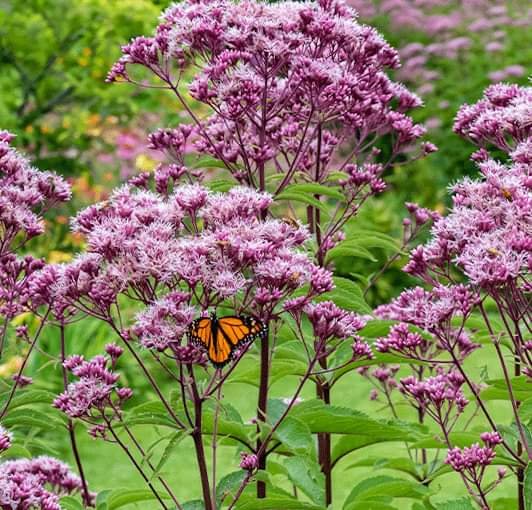
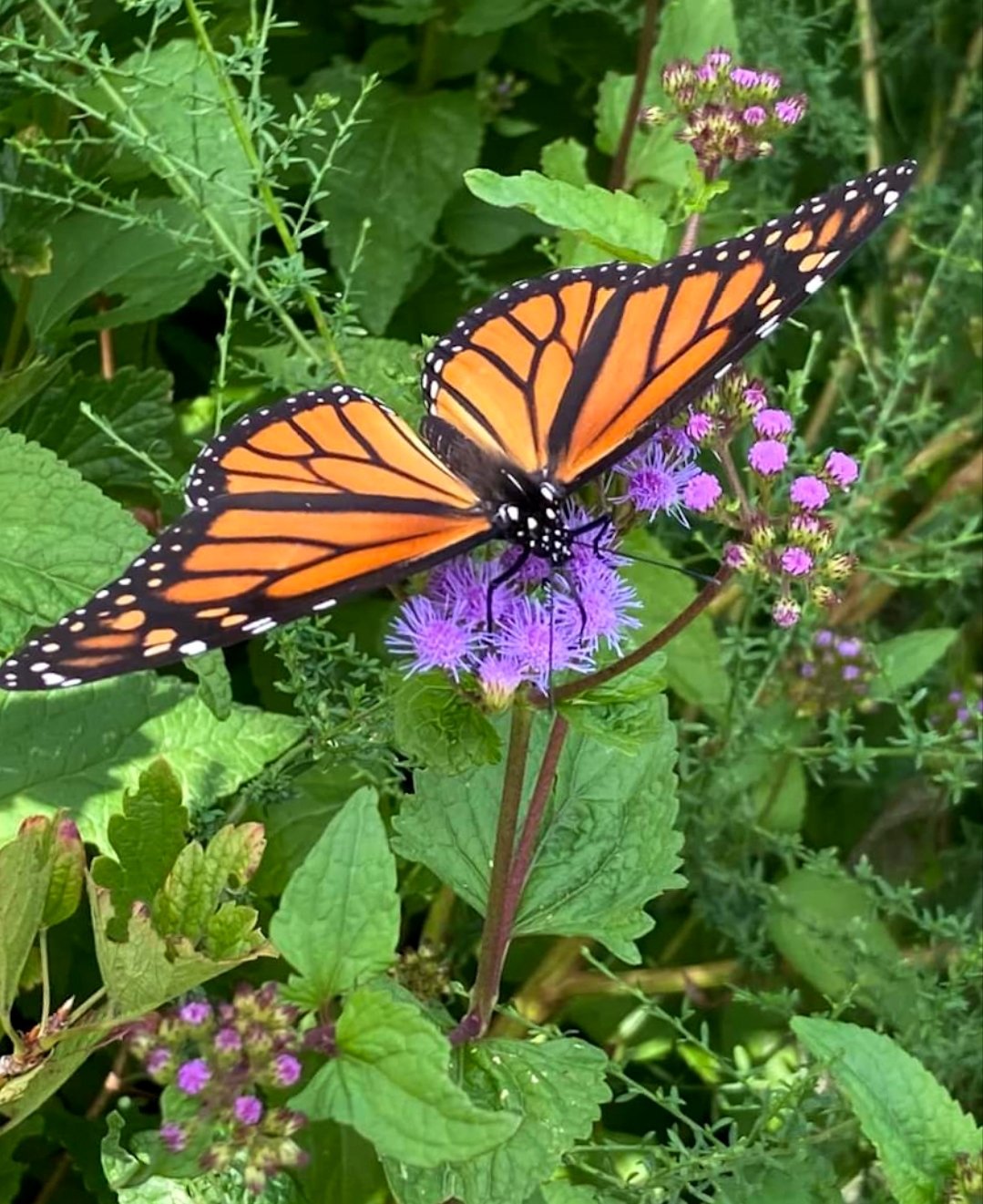
The Striped Garden Caterpillar Moth (Trichordestra legitimais), Clymene Moth (Hapola clymene), Three-lined Flower Moth (Schinia trifascia) and the Boneset Borer Moth (Carmenta pyralidiformis) are all hosted by Boneset while the Yellow-collared Scape Moth (Cisseps fulvicollis) and Summer Azure Butterfly (Celastrina neglecta) Virginia Creeper Clearwing (Albuna fraxini) and Monarch Butterflies (Danaus plexippus) find nectaring on Boneset to be irresistible.
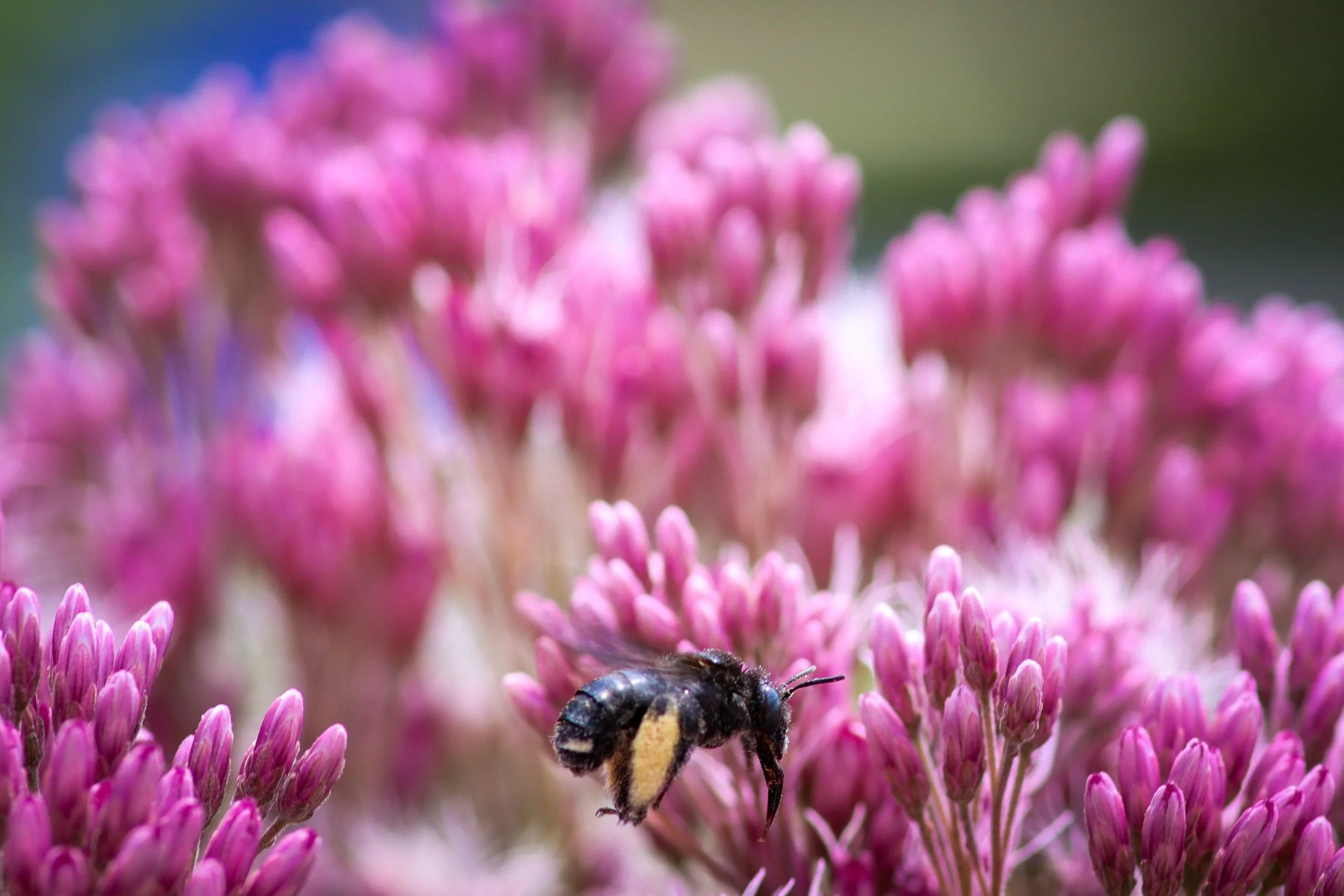
Boneset is widely visited by many, many pollinators such as Yellow Faced Bees, Mining Bees, Small Sweat Bees, Bumble Bees, Green Sweat Bees, Four Banded Sand Wasps, Paper Wasps, Bald Faced Hornets, Hump-Backed Beewolves, Beetle Wasps, Potter Wasps, Grass-carrying Wasps, Thynnid Wasps, Cuckoo Wasps, Thread-Waisted Wasps, Tachinid Flies, Syrphid Flies, Thick-headed Flies, Bee Flies and Soldier Beetles are all common sightings on the very busy Boneset.
Plant Details
USDA Zones: 3-8
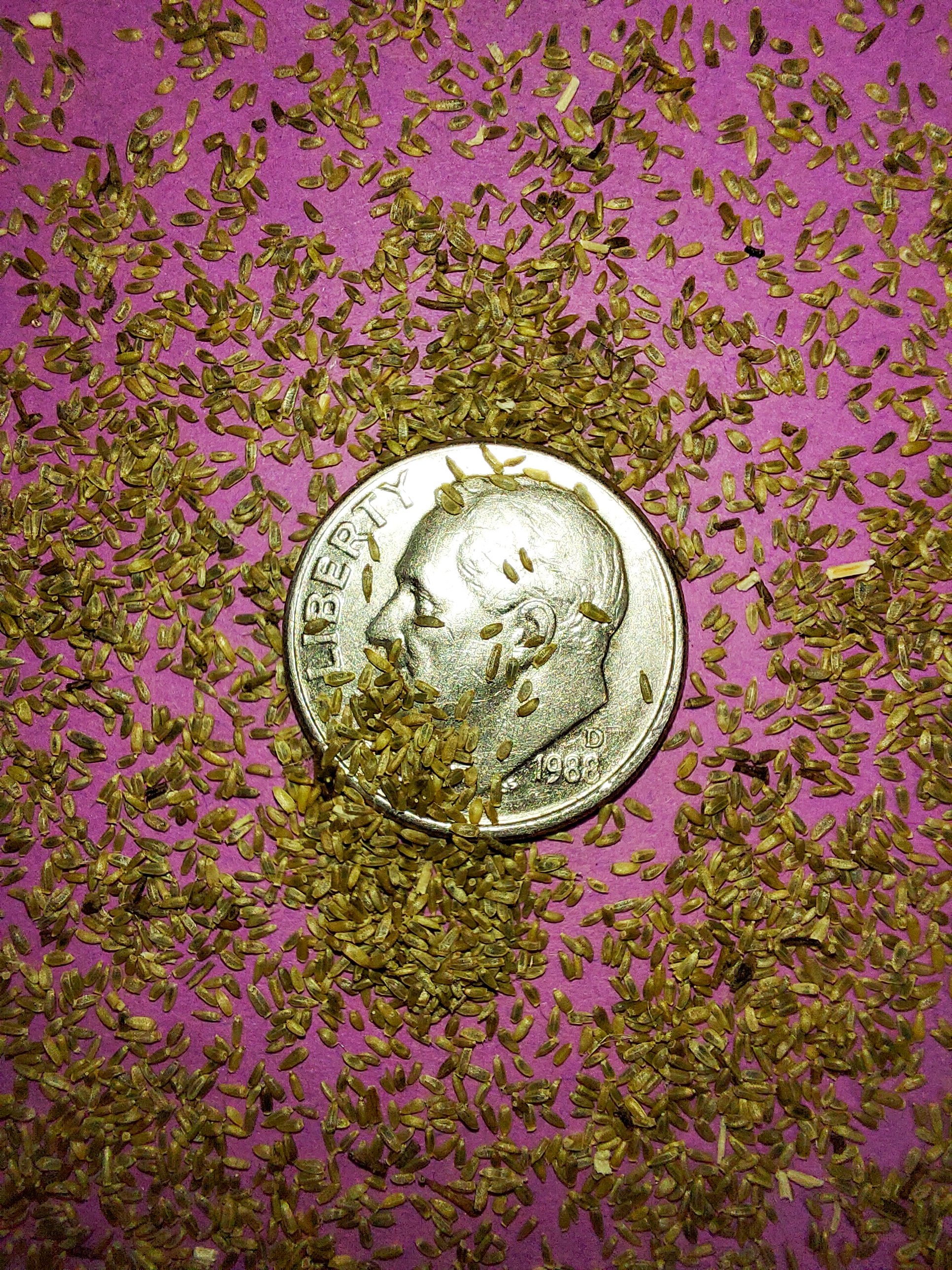
Germination Needs: 30 Days Cold Stratification, Seed is very small and likes soil contact and a view of the light to germinate. Surface sow and do not cover with more than a dusting if any soil. Keep moist until germination but not soaking, if growing in trays water from the bottom only.
Life Cycle: Perennial
Sun Exposure: Full to Partial
Soil Moisture: Wet, Medium-Wet
Plant Spacing: 1-2 feet
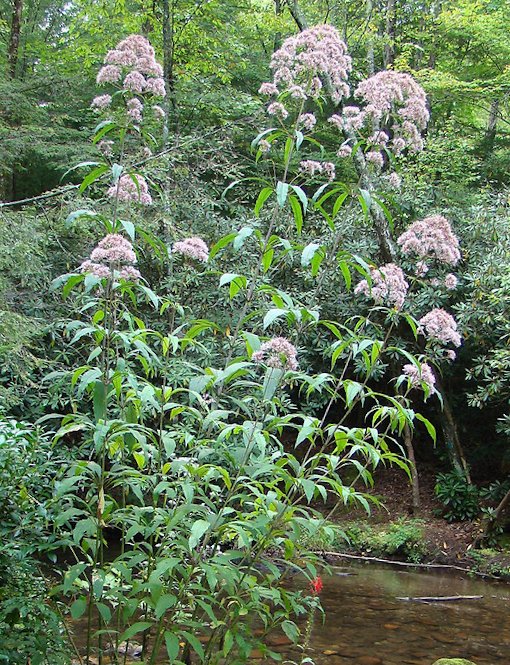
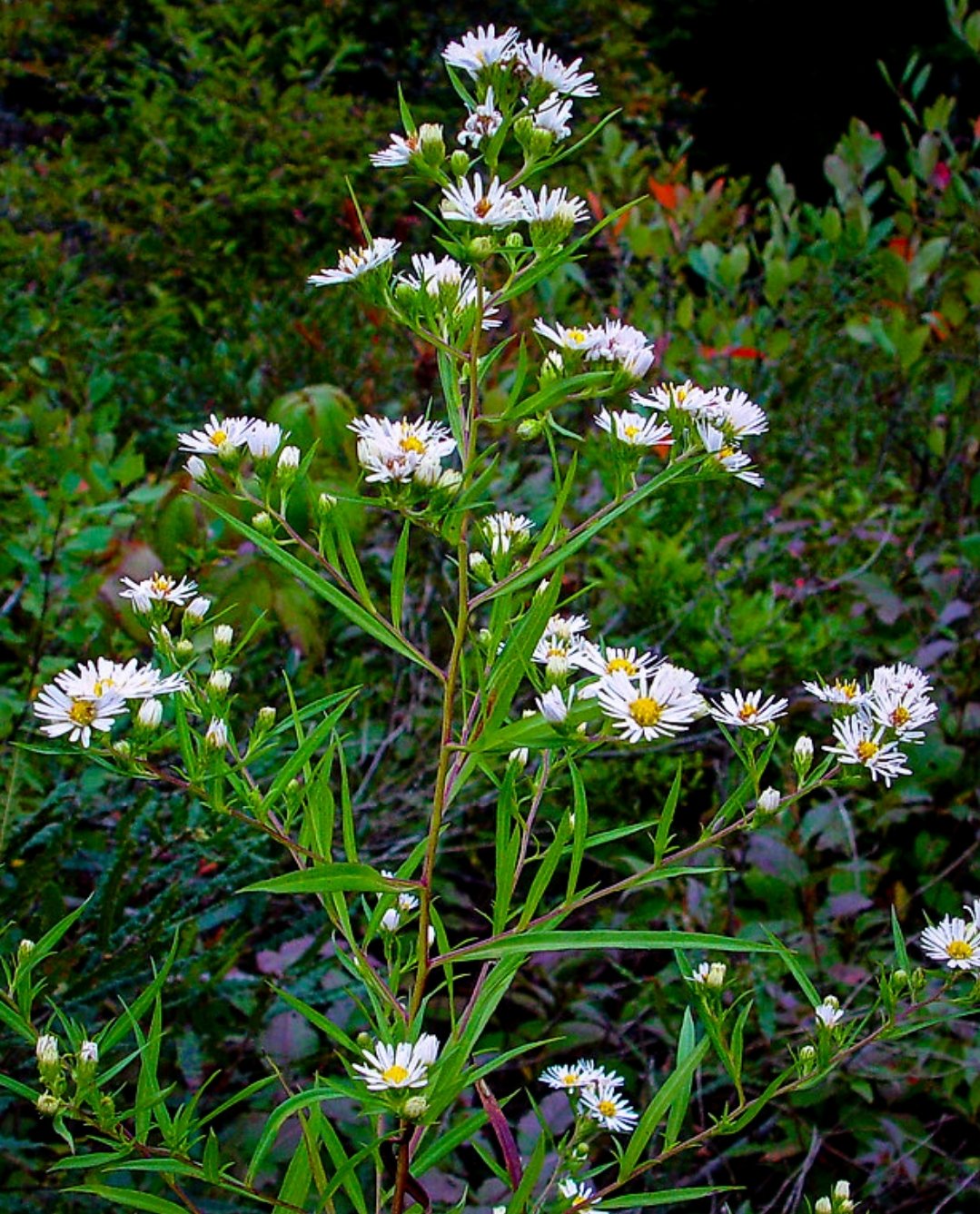
Height: 4 feet
Bloom time: July, August, September
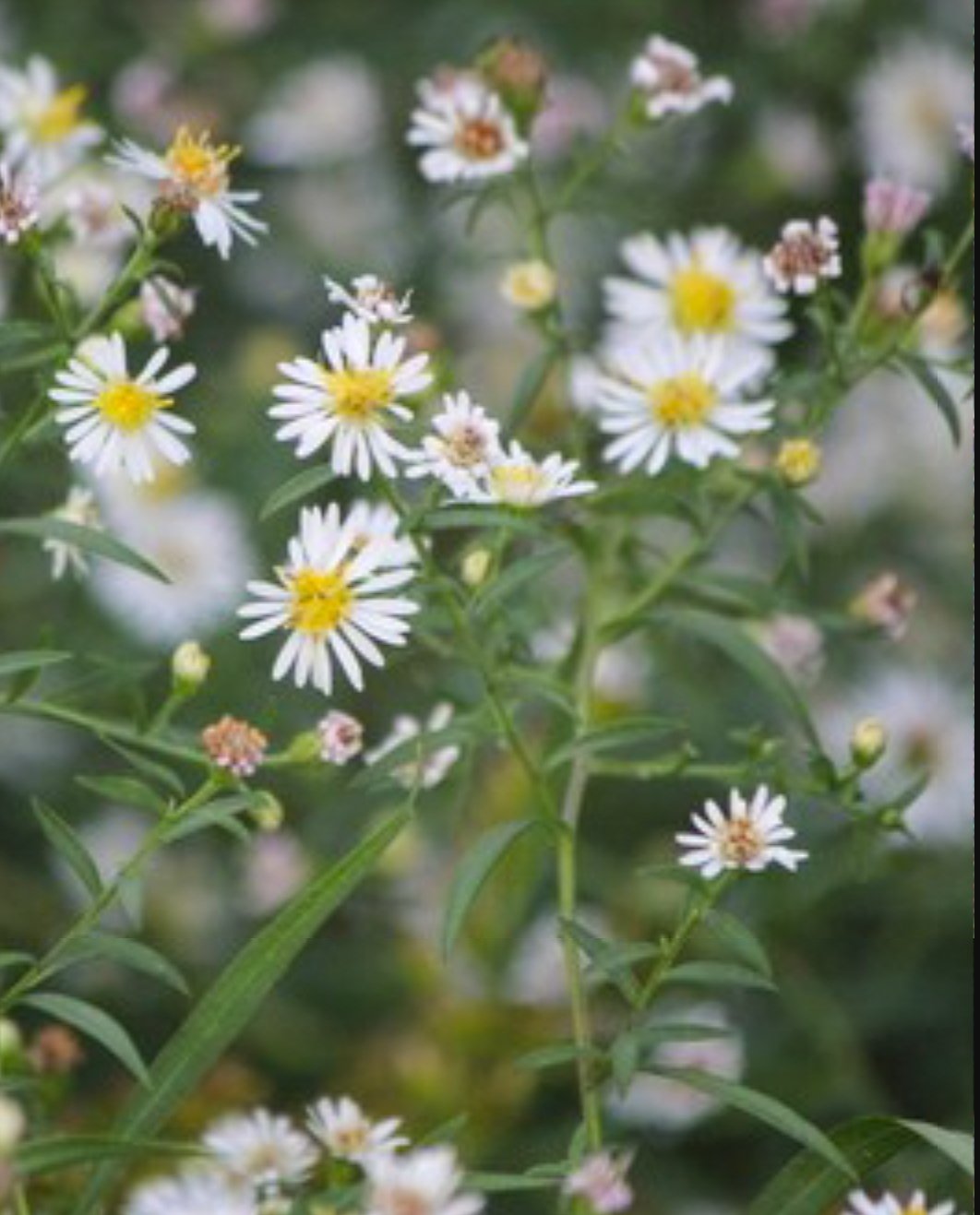
Bloom Color: White
Advantages
Pollinator Favorite: butterflies, moths, bees, wasps, beetles
Bird Favorite: seeds, insects, fruit, nectar, nesting, perches.
Deer Resistant: Yes
.
.
Packet quantities:
We pride ourselves on ethical, hands on, ecological management, using no mechanical or chemical methods whatsoever.
All of our native seed is hand reared, hand picked, and hand packed from native prairies under our exclusive management, never breaking chain of custody from the field until it is sent to you. Each packet is hand prepared for shipment by us, directly.
Small seed species will contain greater than 20-25 seed
Large seed species will contain greater than 10-15 seed
It is our mission to spread the wealth of native plant and pollinator ecological sustainability, and educate back yard gardeners as well as corporate and government entities in how to germinate, grow, and benefit from native synergies.
Thank you for your support, it is because of you, that we can grow together to do, what we do. 🐛🦋🐝🐞🌾🌱🌼🧡
Boneset (Eupatorium perfoliatum)
Eupatorium perfoliatum is the scientific name for the native species more commonly known as Boneset, or alternatively as Common Boneset. Boneset is a North American perennial plant in the Asteraceae family. Most commonly found in the Eastern United States and Canada it is widespread from Nova Scotia to Florida, west as far as Texas, Nebraska, the Dakotas, and Manitoba. Historically speaking this plant has also been called Agueweed, Feverwort, or Sweating-plant. In traditional herbal healing, the plant is known as a diaphoretic, or an agent to cause sweating. Indigenous Americans introduced the plants uses to colonists by who learned to use the plant for breaking fevers by means of heavy sweating and more commonly used it to treat fevers by the African American population of the southern United States.
The name "boneset" comes from the use of the plant to treat dengue fever, which is also called "break-bone fever." Boneset is nearly always found in low, wet areas where both mosquitos and the diseases they can carry often co-exist. Male mosquitos who are pollinators, have been seen pollinating Boneset.
Eupatorium perfoliatum leaves and roots contain a complex mix of phytochemicals, including polysaccharides (with components such as xylose and glucuronic acid), astringent tannins, aromatic volatile oils, bioactive sesquiterpene lactones, various sterols and triterpenes, trace alkaloids, and a range of flavonoids, for example quercetin, kaempferol, and several caffeic acid derivatives.
The Striped Garden Caterpillar Moth (Trichordestra legitimais), Clymene Moth (Hapola clymene), Three-lined Flower Moth (Schinia trifascia) and the Boneset Borer Moth (Carmenta pyralidiformis) are all hosted by Boneset while the Yellow-collared Scape Moth (Cisseps fulvicollis) and Summer Azure Butterfly (Celastrina neglecta) Virginia Creeper Clearwing (Albuna fraxini) and Monarch Butterflies (Danaus plexippus) find nectaring on Boneset to be irresistible.
Boneset is widely visited by many, many pollinators such as Yellow Faced Bees, Mining Bees, Small Sweat Bees, Bumble Bees, Green Sweat Bees, Four Banded Sand Wasps, Paper Wasps, Bald Faced Hornets, Hump-Backed Beewolves, Beetle Wasps, Potter Wasps, Grass-carrying Wasps, Thynnid Wasps, Cuckoo Wasps, Thread-Waisted Wasps, Tachinid Flies, Syrphid Flies, Thick-headed Flies, Bee Flies and Soldier Beetles are all common sightings on the very busy Boneset.
Plant Details
USDA Zones: 3-8
Germination Needs: 30 Days Cold Stratification, Seed is very small and likes soil contact and a view of the light to germinate. Surface sow and do not cover with more than a dusting if any soil. Keep moist until germination but not soaking, if growing in trays water from the bottom only.
Life Cycle: Perennial
Sun Exposure: Full to Partial
Soil Moisture: Wet, Medium-Wet
Plant Spacing: 1-2 feet
Height: 4 feet
Bloom time: July, August, September
Bloom Color: White
Advantages
Pollinator Favorite: butterflies, moths, bees, wasps, beetles
Bird Favorite: seeds, insects, fruit, nectar, nesting, perches.
Deer Resistant: Yes
.
.
Packet quantities:
We pride ourselves on ethical, hands on, ecological management, using no mechanical or chemical methods whatsoever.
All of our native seed is hand reared, hand picked, and hand packed from native prairies under our exclusive management, never breaking chain of custody from the field until it is sent to you. Each packet is hand prepared for shipment by us, directly.
Small seed species will contain greater than 20-25 seed
Large seed species will contain greater than 10-15 seed
It is our mission to spread the wealth of native plant and pollinator ecological sustainability, and educate back yard gardeners as well as corporate and government entities in how to germinate, grow, and benefit from native synergies.
Thank you for your support, it is because of you, that we can grow together to do, what we do. 🐛🦋🐝🐞🌾🌱🌼🧡
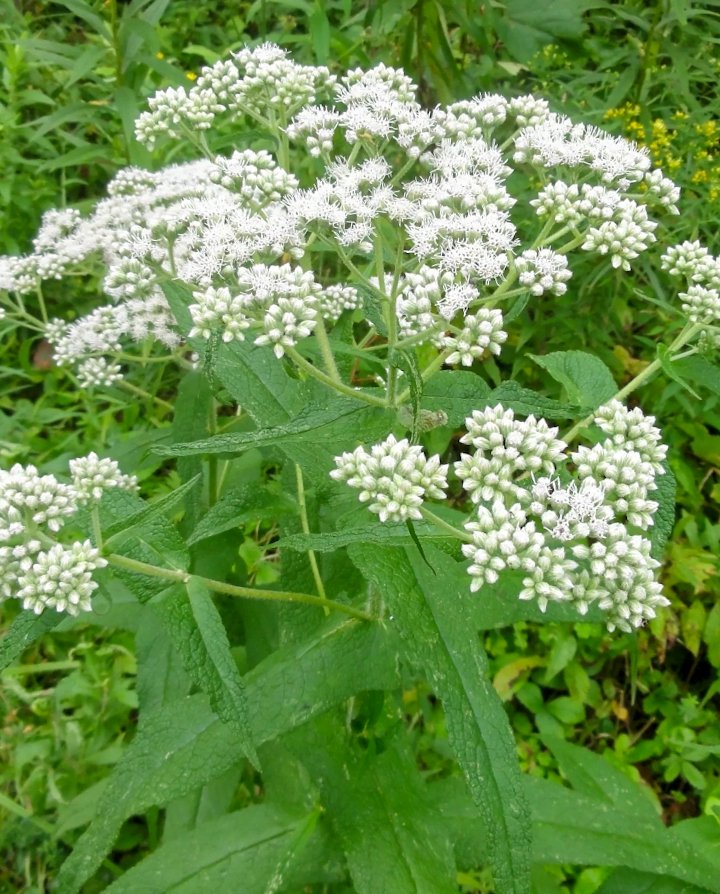 Image 1 of 4
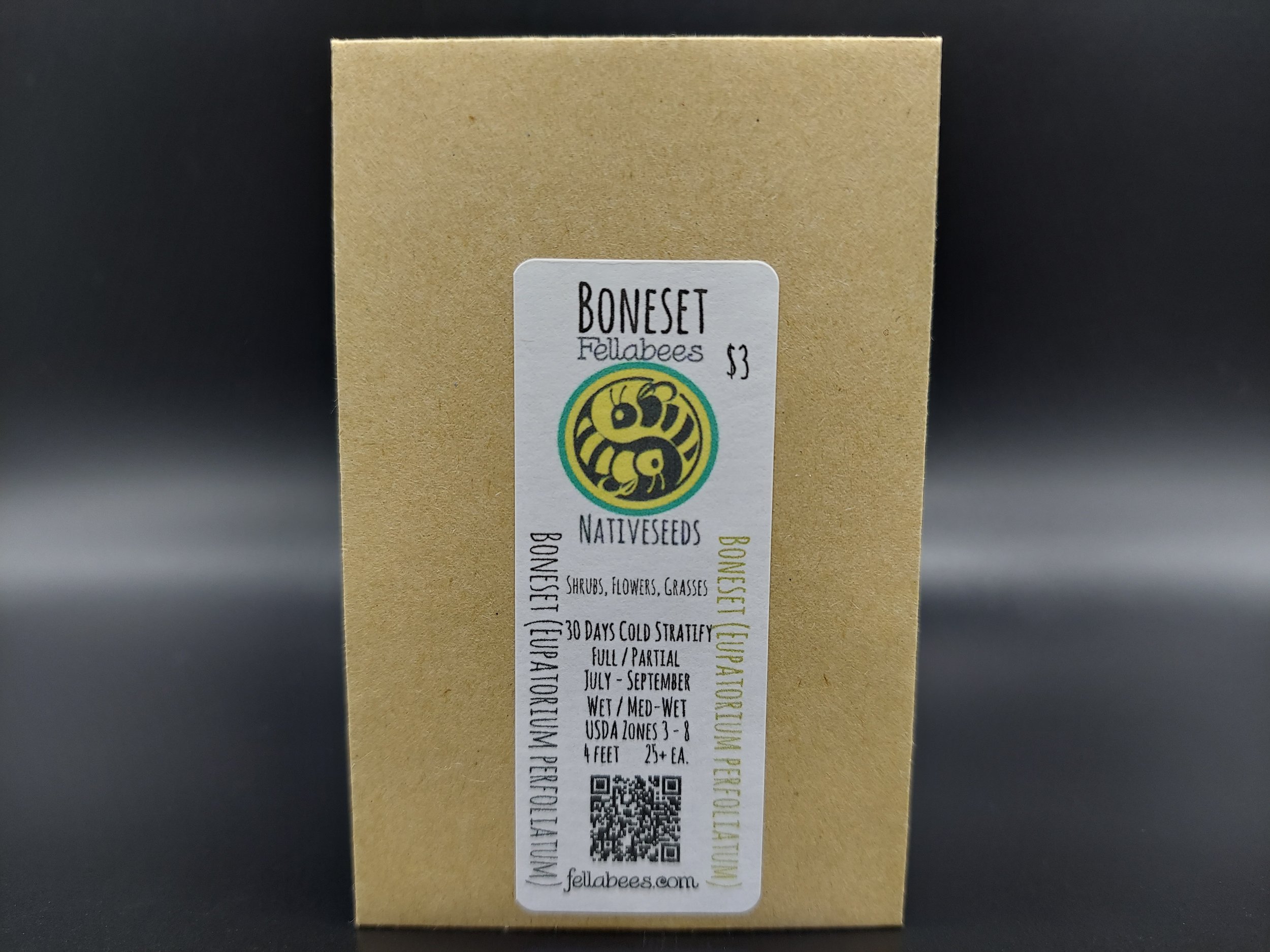 Image 2 of 4
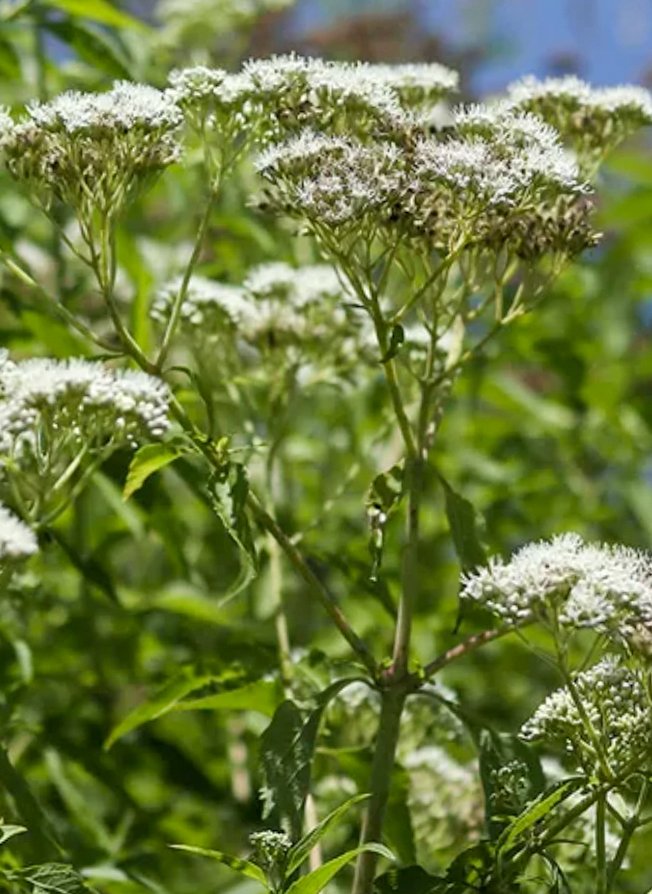 Image 3 of 4
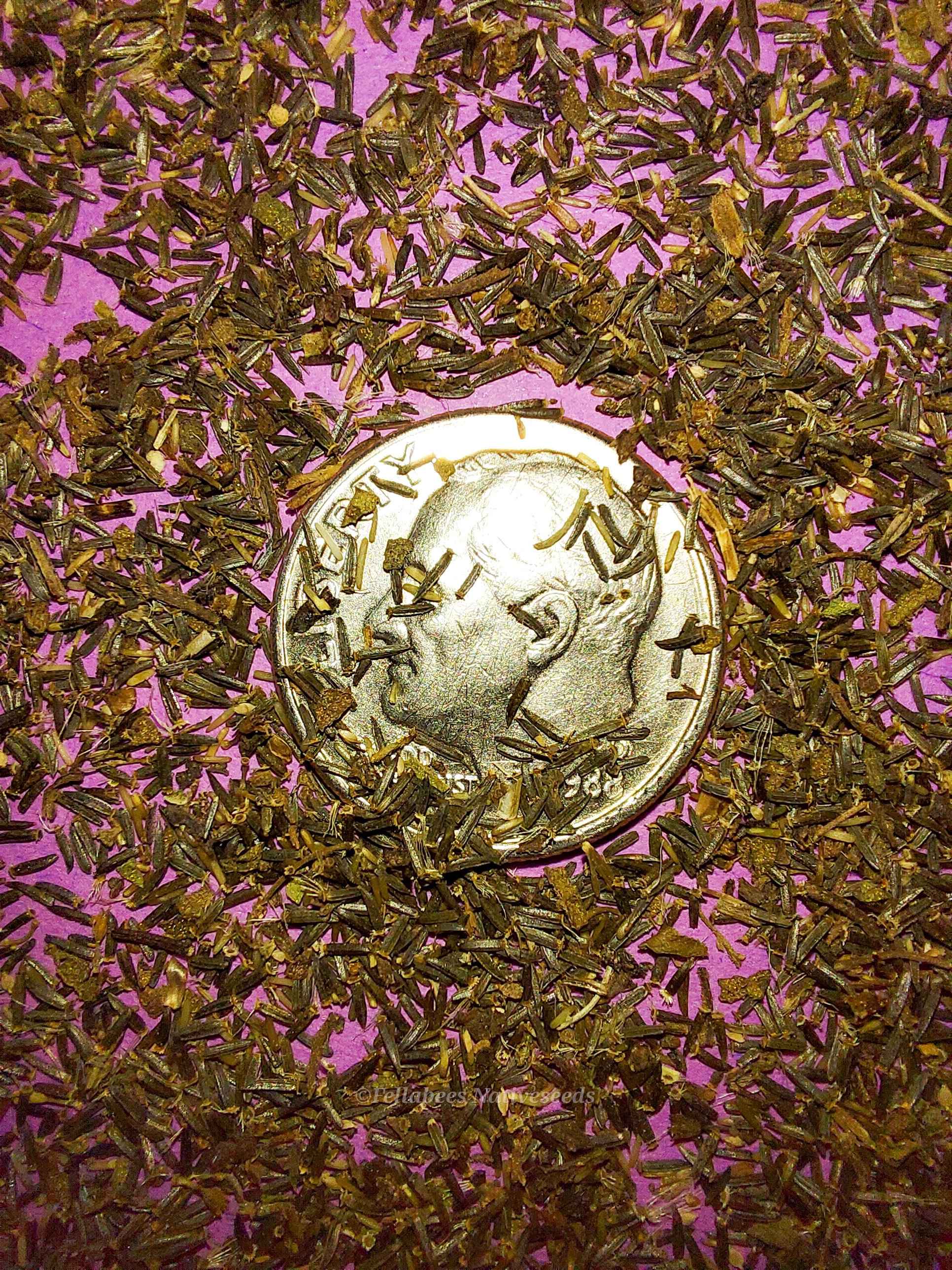 Image 4 of 4